
Senior Dog Age Chart: Find Your Dog's Human Age & Life Stage
A senior dog age chart shows that small dogs become seniors around 10-12 years, medium dogs at 8-10, large dogs at 6-8, and giant breeds at 5-7 years. The first year equals about 15 human years, then aging slows by size.
Senior Dog Age Chart: When Does Your Dog Become a Senior?
Dogs become seniors at different ages depending on their breed and size. Small breeds live longer and enter their senior years later, while giant breeds age faster. Use this chart to find when your dog officially becomes a senior.
| Breed Size | Example Breeds | Senior Age Range | Human Age Equivalent at Senior Onset |
|---|---|---|---|
| Small (under 20 lbs) | Chihuahua, Pomeranian, Dachshund | 10–12 years | 56–64 human years |
| Medium (21–50 lbs) | Beagle, Cocker Spaniel, Bulldog | 8–10 years | 51–60 human years |
| Large (51–90 lbs) | Labrador Retriever, German Shepherd, Golden Retriever | 6–8 years | 47–55 human years |
| Giant (over 90 lbs) | Great Dane, Mastiff, Saint Bernard | 5–7 years | 42–50 human years |
Do dogs slow down at age 7? It depends on size—a 7-year-old Great Dane is already a senior, while a 7-year-old Chihuahua is still middle-aged. The final 25% to 30% of their estimated breed lifespan marks the senior stage.

Dog Years to Human Years: Use Our Senior Dog Age Chart
Forget the old 1 dog year = 7 human years myth. Modern research, including the 2020 UCSD epigenetic clock study, shows aging is faster early and then slows by size. Use this chart to convert your dog's age accurately.
| Dog Age (years) | Small Breed (under 20 lbs) | Medium Breed (21–50 lbs) | Large Breed (51–90 lbs) | Giant Breed (over 90 lbs) |
|---|---|---|---|---|
| 1 | 15 | 15 | 15 | 15 |
| 2 | 24 | 24 | 24 | 24 |
| 3 | 28 | 28 | 28 | 28 |
| 4 | 32 | 32 | 32 | 32 |
| 5 | 36 | 36 | 36 | 36 |
| 6 | 40 | 42 | 45 | 49 |
| 7 | 44 | 47 | 50 | 56 |
| 8 | 48 | 51 | 55 | 64 |
| 9 | 52 | 56 | 61 | 71 |
| 10 | 56 | 60 | 66 | 79 |
| 11 | 60 | 65 | 72 | 86 |
| 12 | 64 | 69 | 77 | 93 |
| 13 | 68 | 74 | 82 | 100 |
| 14 | 72 | 78 | 88 | 107 |
| 15 | 76 | 83 | 93 | 114 |
The first year of a dog's life is equal to 15 human years. After age 2, the conversion slows: small breeds add about 4 human years per dog year, while giant breeds add 7–14 human years per dog year.
Signs Your Senior Dog May Be in Pain or Declining
A good fit if…
- Mobility changes—Your dog struggles to stand, climb stairs, or walks stiffly, possibly from osteoarthritis.
- Appetite loss—They refuse food or water for more than 24 hours.
- Behavioral shifts—Increased anxiety, confusion (Canine Cognitive Dysfunction), or withdrawal from family.
- Pain signs—Whining, limping, or avoiding touch in specific areas.
- Weight changes—Unexplained weight loss or sudden gain.
Consider another option if…
- Mild aging—Your dog is simply slower but still eats, plays, and interacts normally.
- Normal sleeping more—Senior dogs sleep more; it's not necessarily decline.
- You need a quality-of-life assessment—Our team offers compassionate support and behavioral medicine to evaluate your dog's comfort.
If you see multiple signs from the first list, schedule a veterinary exam. We serve Berkeley, Albany, El Cerrito, Oakland, Richmond, Emeryville, Kensington, and Piedmont.
Senior Dog Health: What's Normal Aging vs. a Problem?
As dogs age, some changes are normal, while others signal disease. Use this checklist to tell the difference.
- Normal: Graying muzzle—Just like humans, dogs get gray hair. No health concern.
- Problem: Sudden weight loss—Could indicate dental disease, kidney failure, or cancer.
- Normal: Sleeping more—Senior dogs need more rest. Do old dogs sleep a lot? Yes, up to 14–16 hours daily is typical.
- Problem: Urinating indoors—May signal Canine Cognitive Dysfunction, urinary tract infection, or diabetes.
- Normal: Slower pace—Reduced energy is expected. They still enjoy walks, just shorter.
- Problem: Limping or stiffness—Osteoarthritis is common but manageable with joint supplements like glucosamine and chondroitin.
- Normal: Hearing or vision loss—Gradual decline is common. Adapt your home environment.
- Problem: Aggression or anxiety—Could be pain-related or cognitive decline. Behavioral medicine can help.
Signs your dog's quality of life is declining include persistent pain, loss of interest in food, and inability to stand. Our team at Campus Veterinary Clinic can help you differentiate.
American Veterinary Medical Association
The American Veterinary Medical Association (AVMA) is a professional organization founded in 1863 that represents over 105,000 veterinarians in the United States. It provides continuing education, publishes the Journal of the American Veterinary Medical Association (JAVMA), and accredits veterinary schools through its Council on Education. The AVMA also lobbies for animal welfare legislation and offers resources for pet owners. For senior dog care, the AVMA's guidelines on preventive care, nutrition, and pain management help ensure your aging dog receives evidence-based treatment.
Directions to our animal hospital in Berkeley from Berkeley Police Department
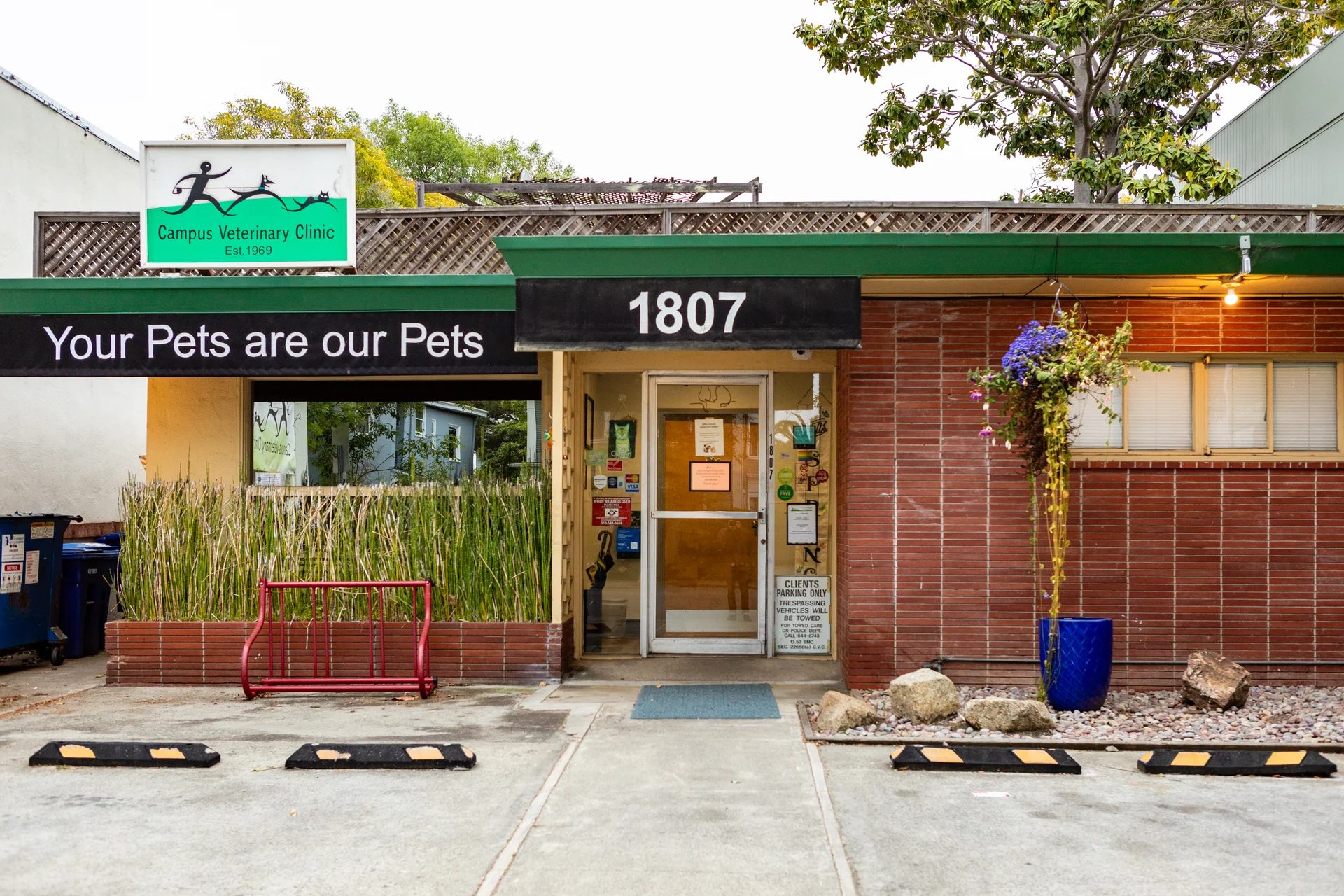
Start at Berkeley Police Department and head to Campus Veterinary Clinic at 1807 Martin Luther King Jr Way, Berkeley, CA 94709.
Senior Dog Vet Visit Schedule: How Often to Go
Senior dogs need more frequent checkups than younger dogs. Follow this schedule to catch problems early.
| Life Stage | Age Range | Vet Visit Frequency | Key Tests |
|---|---|---|---|
| Senior (early) | 5–8 years (varies by size) | Every 6 months | Physical exam, dental check, bloodwork (CBC, chemistry panel, thyroid) |
| Senior (late) | 8+ years (small breeds) or 6+ years (giant breeds) | Every 6 months | Bloodwork every visit, urinalysis, blood pressure check |
| Geriatric | Final 25–30% of lifespan | Every 3–4 months | Full bloodwork, imaging if needed, cognitive assessment |
Routine bloodwork helps detect kidney disease, liver issues, and immunosenescence early. Call us at (510) 549-1252 to schedule your senior dog's next visit. We accept CareCredit for payment flexibility.
Senior Dog Nutrition: Choosing the Right Food & Supplements
Senior dogs need fewer calories but higher quality protein, plus joint and brain support. Compare your options.
| Nutrient | Benefit for Senior Dogs | Food Sources | Supplement Option |
|---|---|---|---|
| Glucosamine & Chondroitin | Supports joint health and reduces osteoarthritis pain | Senior dog foods with joint support | Chewable tablets or powders |
| Omega-3 Fatty Acids | Reduces inflammation, supports brain and heart health | Fish oil, flaxseed | Liquid or capsule supplements |
| High-quality protein | Maintains muscle mass | Chicken, lamb, fish | Senior formulas with 25–30% protein |
| Fiber | Supports digestion and weight management | Pumpkin, sweet potato, brown rice | Fiber supplements (ask your vet) |
Hydration is critical—senior dogs often drink less. Add water to food or use a pet fountain. Always consult your vet before adding supplements.
Senior vs. Geriatric Dog: What's the Difference?
Veterinary medicine distinguishes between senior and geriatric stages to adjust care intensity.
| Stage | Definition | Typical Age (varies by size) | Care Focus |
|---|---|---|---|
| Senior | Last 25–30% of estimated breed lifespan | 5–12 years | Preventive care, early disease detection, nutrition adjustment |
| Geriatric | Final 10–15% of lifespan | 10+ years (small) or 7+ years (giant) | Palliative care, pain management, quality-of-life monitoring, frequent vet visits |
Geriatric dogs often have multiple chronic conditions like osteoarthritis, CCD, and immunosenescence. Our team provides compassionate support and behavioral medicine to help you navigate this stage.
For details on services and visits, see the main page about animal hospital berkeley.
Sources
Also asked as
- When is my dog considered a senior?
- How to calculate dog years to human years accurately?
- What age is old for a dog by breed size?
Frequently asked questions
Do dogs slow down at age 7?
It depends on breed size. A 7-year-old Great Dane is a senior and may slow down significantly, while a 7-year-old Chihuahua is still middle-aged and likely active. Use our senior dog age chart by size to know when your dog enters the senior stage.
Do old dogs sleep a lot?
Yes, senior dogs often sleep 14–16 hours daily. This is normal as their energy levels drop. However, if your dog is difficult to wake or seems disoriented, it could signal Canine Cognitive Dysfunction or an underlying health issue.
What are signs a dog's quality of life is declining?
Key signs include persistent pain (limping, whining), loss of appetite, inability to stand or walk, incontinence, and withdrawal from family. If you notice multiple signs, consult your vet for a quality-of-life assessment.
How long will a dog remember his owner?
Dogs have strong long-term memory for familiar people. Even with cognitive decline, they often recognize their owners through scent and voice. However, Canine Cognitive Dysfunction can cause confusion and disorientation.
Do dogs know it's their last day?
There's no scientific evidence that dogs understand death. They may sense changes in your behavior or their own body, but they live in the moment. Focus on providing comfort and pain relief in their final days.